
Cluster of galaxies are amongst the most luminous X-ray sources in the Universe. The X-ray emission arises from the intracluster medium - very hot (10 million degree Celsius) gas which is trapped and virialized within the deep gravitational potentials of the clusters.
The X-ray of clusters of galaxies are investigated using satellite-based X-ray telescopes, such as ROSAT:
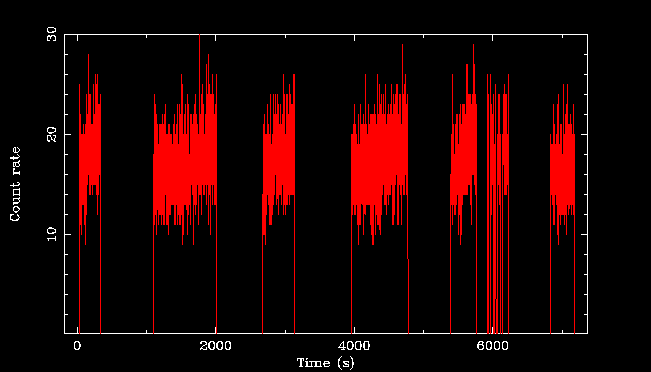
The X-ray data are collected in a number of observation intervals as the satellite orbits the earth. This can be seen in the figure below which shows the data accumulated in each orbit.
The information is contained in images and spectra:
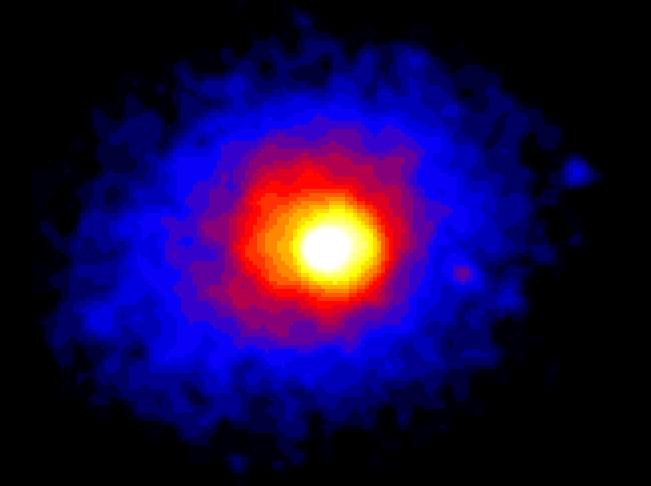
The image above, from the ROSAT satellite, shows the spatially-extended nature of the emission from the hot intracluster gas in the Centaurus cluster.
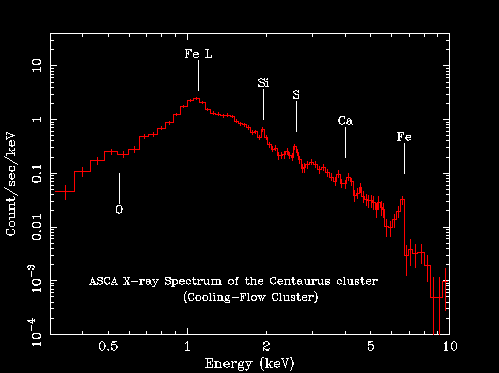
The spectra above, from the ASCA satellite, is taken from the central regions of the Centaurus cluster. It shows some emission lines and an absorption edge (which are labelled) due to different components of the intracluster medium.
Click to return to the start of the clusters section.